

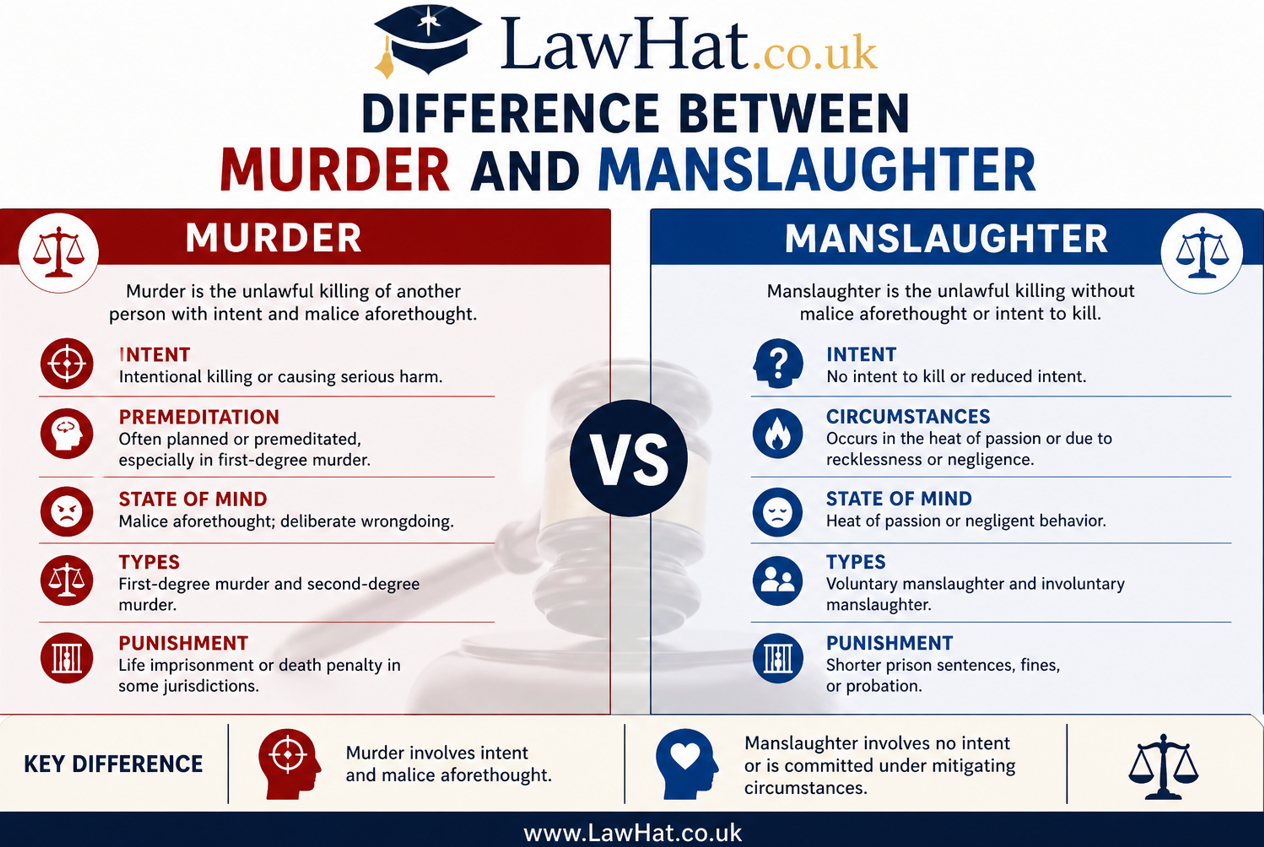
Learn the key legal differences between murder and manslaughter, including intent, types, penalties, and real-world examples.
Understanding the difference between murder and manslaughter is essential in criminal law. Both involve the unlawful killing of a person, but they are distinguished by the offender’s intent, state of mind, and surrounding circumstances. These differences significantly affect how courts classify the crime and determine punishment.
This article explains the legal definitions, types, key differences, and examples of murder and manslaughter in a clear and practical way.
Content Hints
What Is Murder?
Murder is considered the most serious form of homicide. It generally involves the intentional and unlawful killing of another person with “malice aforethought.”
Key Elements of Murder:
- Intent to kill or cause serious harm
- Premeditation (in many cases)
- Malice aforethought (a legal term meaning deliberate wrongdoing)
Types of Murder:
First-Degree Murder
- Planned and deliberate
- May involve premeditation or specific intent
- Often includes aggravating factors (e.g., killing a police officer)
Second-Degree Murder
- Intentional but not premeditated
- May involve reckless disregard for human life
Example:
If someone carefully plans and executes a killing, it is classified as first-degree murder. If the killing happens intentionally but without prior planning, it may fall under second-degree murder.
What Is Manslaughter?
Manslaughter is also unlawful killing, but without the same level of intent as murder. It is considered less severe because it often involves lack of planning or diminished responsibility.
Types of Manslaughter:
Voluntary Manslaughter
- Occurs in the “heat of passion”
- Triggered by sudden provocation
- No time to cool off before the act
Example:
A person kills someone immediately after discovering a shocking betrayal.
Involuntary Manslaughter
- Unintentional killing
- Caused by reckless or negligent behavior
Example:
A driver causes a fatal accident while driving dangerously.
Key Differences Between Murder and Manslaughter
| Factor | Murder | Manslaughter |
| Intent | Intentional killing | No intent or reduced intent |
| Premeditation | Often present (especially first-degree) | Absent |
| Severity | More serious | Less serious |
| State of Mind | Malice aforethought | Heat of passion or negligence |
| Punishment | Harsher (life imprisonment or death) | Lesser penalties |
Role of Intent in Both Crimes
Intent is the most important factor that separates murder from manslaughter.
- In murder, the offender has a clear intention to kill or cause serious harm.
- In manslaughter, the killing happens without prior intent or due to emotional disturbance or negligence.
Courts carefully examine evidence such as behavior, planning, and circumstances to determine intent.
Legal Consequences
Murder Penalties:
- Life imprisonment
- In some jurisdictions, the death penalty
- Long-term criminal record
Manslaughter Penalties:
- Shorter prison sentences
- Fines or probation (in some cases)
- Less severe criminal classification
Punishment varies depending on the country, state laws, and case details.
Real-World Application
In real legal cases, distinguishing between murder and manslaughter can be complex. Lawyers often argue over:
- Whether the act was planned
- The mental state of the accused
- Presence of provocation
- Level of negligence
For example, a bar fight that leads to death may be charged as manslaughter if it was spontaneous, but as murder if intent to kill can be proven.
Importance of Understanding the Difference
Knowing the difference helps:
- Law students and professionals apply correct legal principles
- Individuals understand criminal responsibility
- Courts ensure fair judgments based on intent and circumstances
Misclassification can lead to unjust punishment or wrongful acquittal.
Conclusion
While both murder and manslaughter involve unlawful killing, the difference lies mainly in intent, planning, and emotional state. Murder is intentional and often premeditated, making it the more serious crime. Manslaughter, on the other hand, involves less intent or occurs under mitigating circumstances, leading to lighter penalties.
Understanding these distinctions is crucial for anyone studying law or trying to comprehend how justice systems evaluate serious crimes.
FAQ
Is manslaughter the same as accidental killing?
Not always. Manslaughter can include accidental deaths caused by negligence, but not all accidents qualify as manslaughter.
Can manslaughter become murder?
Yes, if evidence shows intent or premeditation, a manslaughter charge can be upgraded to murder.
What is the “heat of passion”?
It refers to a situation where someone acts emotionally without time to think, reducing the crime from murder to voluntary manslaughter.
Which is punished more severely?
Murder carries much harsher penalties than manslaughter due to intentional killing.
Does every country define these crimes the same way?
No, definitions and penalties vary by jurisdiction, but the core difference—intent—remains consistent worldwide.