

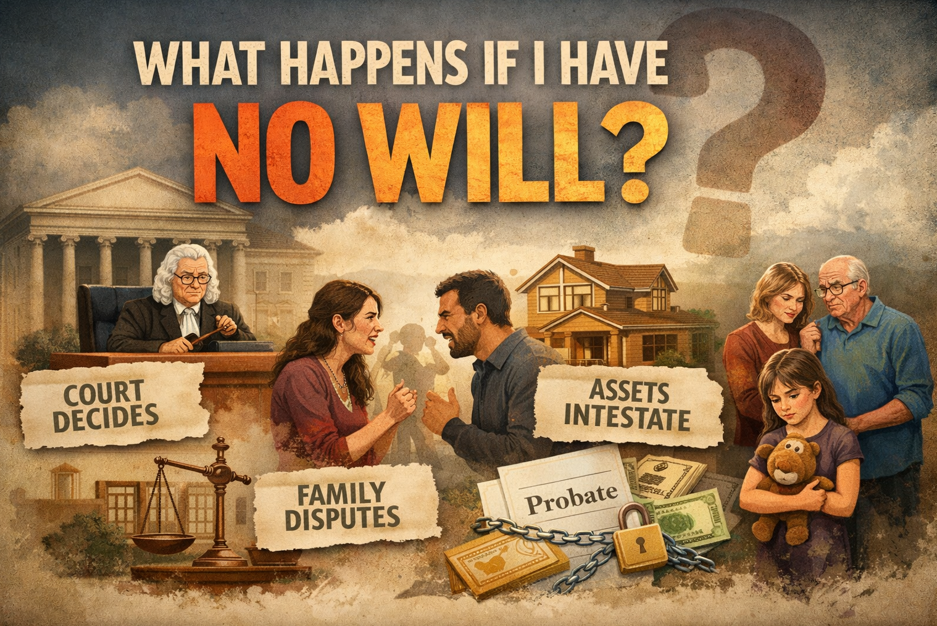
If you die without a will, state law decides who gets everything you own. The court chooses who raises your children. The court chooses who takes control of your home, money, and personal items. Your partner might get nothing. Your children might wait years for answers. Family tension grows. Old grudges return. Simple choices you could have made now turn into long court fights. Many people avoid thinking about death. That silence carries a price. You worked hard for what you have. You care about who depends on you. You deserve control over what happens next. A clear will gives that control. A Los Angeles estate planning attorney can explain your options, listen to your worries, and help you record your wishes in plain language. You do not need wealth. You only need the wish to protect the people and things that matter.
Content Hints
What “Dying Intestate” Really Means
When you die without a will, you die “intestate.” State law writes a plan for you. That plan may not match your values. It may not match your family story.
Courts use a strict order for who inherits. The law looks at your legal ties, not your love ties. It ignores promises, memories, and private deals.
You lose your voice. Your family loses clear direction. The court must step in and sort through grief and money at the same time.
Who Gets Your Property Without a Will
Every state has its own rules. Yet most follow a pattern. The chart below shows a simple view of what often happens when you die without a will.
| Your Family Situation | Who Likely Inherits Under State Law | Common Surprises for Families |
|---|---|---|
| Married, no children | Spouse and sometimes your parents | Your spouse may need to share with your parents |
| Married, with children | Spouse and children split your property | Spouse may not receive the full home or savings |
| Unmarried, with children | Children only | Long term partner may receive nothing |
| Unmarried, no children | Parents, then siblings, then extended family | Distant relatives may inherit instead of close friends |
| Blended family | Spouse and biological or adopted children | Stepchildren often receive nothing |
You can read a clear summary of common state rules from the California Courts intestate succession guide. Other states follow the same kind of structure with different details.
What Happens To Your Children
Without a will, you do not choose a guardian for your minor children. A judge does. The judge looks at names that step forward. The judge may hear family conflict. The judge may see old anger and new fear.
The court then picks the person it sees as “best” under state law. That person may not share your faith. That person may not share your values. That person may live in another city. Your children may move schools, friends, and routines in a single hard season.
A will lets you
- Name a guardian you trust
- Name a backup in case your first choice cannot serve
- Leave short guidance about your hopes for your children
Who Handles Your Money And Debts
When you have a will, you choose an “executor.” This person pays your bills, files tax returns, and passes property to the people you name.
When you have no will, the court appoints someone. That person may be the loudest voice in the room. That person may know little about money or records.
This can lead to
- Late payments and extra fees
- Lost documents and missed accounts
- More court hearings and higher costs
Simple planning avoids these heavy problems. A will gives clear marching orders. It reduces confusion at the worst time.
Impact On Unmarried Partners And Stepchildren
State law often ignores your romantic partner if you are not married. It often ignores stepchildren if you never adopted them. Your partner may live in your home for years. Your stepchild may care for you in illness. Still, the law may treat them as strangers.
Without a will
- Your partner may lose housing when your relatives inherit the home
- Your stepchildren may receive nothing, even if they call you “mom” or “dad”
- Family rifts may grow as people fight over memories and property
With a will, you can name each person you care about. You can give clear gifts and avoid guesswork.
How The Process Affects Your Family
Probate is the court process that settles your estate. Dying without a will does not skip probate. It often makes it slower.
Your family may face
- Long waits before they can sell or use your property
- More court filings and hearings
- Higher legal and court costs paid from your estate
Grief mixed with money disputes can tear families apart. Old hurt can harden. Simple written wishes could ease that strain.
Three Key Choices You Can Make Now
You can lower risk with three steps.
- Write a basic will that names who receives your property
- Choose a guardian for your minor children and a backup
- Pick an executor you trust and talk through your wishes
You can also review state guidance. The USA.gov guide on wills and trusts gives plain language help and links to state resources.
Protecting What Matters To You
You do not need complex planning. You need clear words on paper. You need signatures and witnesses that meet state law. You need to tell someone where the will is stored.
Without a will, strangers in a courtroom write your family story. With a will, you do.