
A domestic violence charge pulls your life apart fast. You face fear, shame, and confusion, often all at once. You may worry about jail, a criminal record, and losing contact with your children. You may also feel pressure from family, work, and social media. This pressure can crush your judgment. You need clear facts about what the law can do to you. You also need to know what you can do to protect yourself. This blog explains the penalties for a domestic violence conviction. It covers jail and prison time. It explains fines and court costs. It also describes protective orders and limits on your rights. You will see how a conviction can affect your job, housing, and future choices. You will also see why speaking with a domestic violence defense lawyer early can change the outcome.
Content Hints
What Counts As Domestic Violence
Domestic violence means harm or threats against a current or former spouse, dating partner, co-parent, or family member. Each state uses its own words. The core idea stays the same. The law can treat even one heated moment as a crime.
You can face charges for:
- Hitting, pushing, or grabbing
- Threats that cause fear
- Stalking or constant contact
- Destroying property during a conflict
- Blocking someone from leaving a room
States post their definitions and penalties. For example, you can review domestic violence laws and protections on the U.S. Department of Justice domestic violence page.
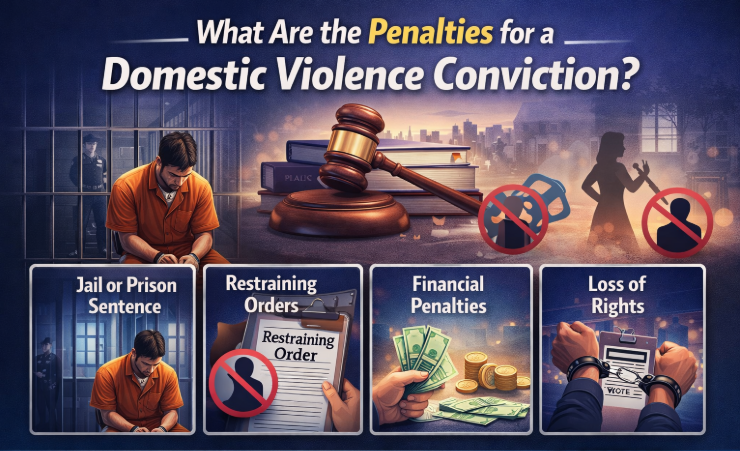
Criminal Penalties You May Face
A conviction brings both short term and long term punishment. The exact outcome depends on your state, your record, and the facts in your case.
Common penalties include:
- Jail or prison
- Fines and fees
- Probation and supervision
- Mandatory classes
- Community service
Typical Penalties for a First Domestic Violence Conviction
| Type of Penalty | Misdemeanor Level | Felony Level |
|---|---|---|
| Jail or Prison Time | Up to 1 year in local jail | More than 1 year in state prison |
| Fines | Often up to several thousand dollars | Often higher fines and extra assessments |
| Probation | 1 to 3 years of court supervision | Longer supervision after prison release |
| Classes and Treatment | Batterer intervention or anger classes | Longer and stricter program rules |
| Protective Orders | No contact or limited contact rules | Stricter limits and longer duration |
Federal and state data show that many people on probation face jail if they miss classes or payments. The penalties often grow after a first conviction.
Protective Orders And No Contact Rules
Courts often issue a protective order as soon as charges start. The order may come before any conviction. It can control where you live, who you see, and how you parent.
A protective order can:
- Ban contact in person, by phone, or online
- Remove you from the home
- Limit visits with children
- Require you to give up firearms
A violation is a separate crime. You can face arrest even if the other person wants contact. The judge only cares whether you obeyed the order.
Loss Of Gun Rights
Domestic violence convictions affect gun rights in a harsh way. Under federal law, a misdemeanor crime of domestic violence can bar you from owning or buying guns.
The Bureau of Alcohol Tobacco Firearms and Explosives firearm rules explain how even one conviction can block legal gun possession. The bar often lasts for life.
Gun surrender can be ordered while your case is pending. It can also apply under a long term protective order. Failure to surrender can lead to new charges.
Effects On Work, Housing, And Education
A domestic violence conviction follows you into daily life. Many employers run background checks. Many landlords and schools do the same. You may face:
- Lost job or blocked promotion
- Rejection from rental housing
- Limits on professional licenses
- Problems with security clearances
You also may not qualify for some public housing or training programs. Even if the law does not bar you, fear and stigma can close doors. The record does not fade fast.
Impact On Immigration And Family Court
If you are not a U.S. citizen, a domestic violence conviction can threaten your status. It can lead to removal or denial of relief. Even a plea to a lesser offense can count as a problem under immigration law.
Family court judges also watch domestic violence findings. A conviction can affect:
- Child custody and visitation
- Decision making rights for schooling and health
- Ability to attend school events or activities
Judges focus on safety. They may limit parenting time or require supervised visits. They may also extend protective orders for many years.
Why Early Legal Help Matters
Domestic violence laws carry harsh penalties. Yet the process still allows you to act. You can:
- Use your right to stay silent with police
- Ask for a lawyer before any talk with officers
- Gather texts, photos, and witness names
Each choice shapes the outcome. Early advice can reduce charges, change conditions, or avoid a conviction. Your future work, housing, family life, and safety all sit on what happens in the first weeks after arrest.
You do not have to face this storm alone. Clear information and strong guidance help you move from panic to a plan.