

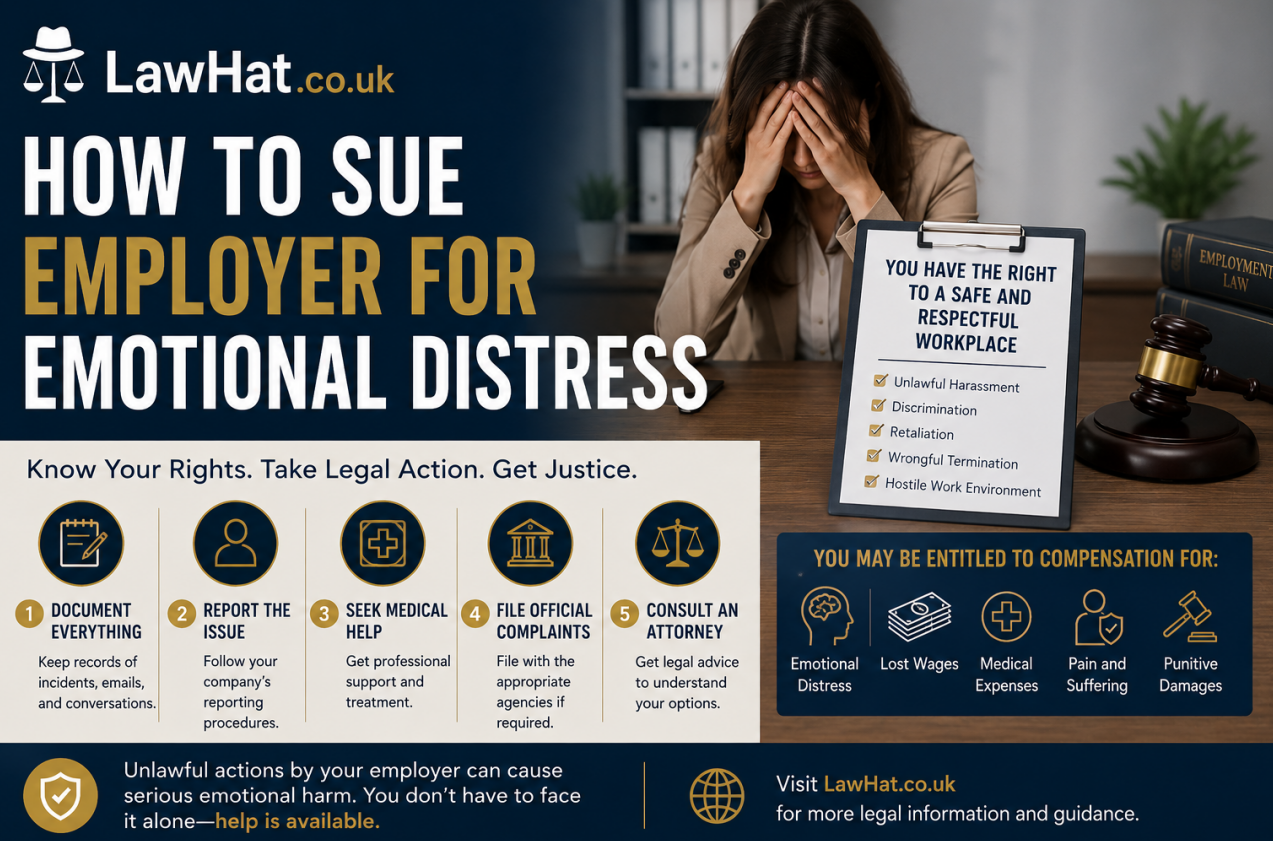
Learn how to sue an employer for emotional distress, what evidence you need, possible compensation, and legal steps to take.
Workplace stress is common, but there is a legal difference between ordinary job-related stress and emotional distress caused by unlawful employer conduct. If an employer’s actions result in severe emotional harm, you may wonder whether you have the right to file a lawsuit.
The answer is sometimes. Successfully suing an employer for emotional distress depends on the facts of your case, the laws in your jurisdiction, and whether the employer violated employment or personal injury laws.
This guide explains when you may have a valid claim, what evidence you need, and the steps involved in pursuing legal action.
Content Hints
What Is Emotional Distress?
Emotional distress refers to significant psychological suffering caused by another person’s wrongful actions.
Examples include:
- Anxiety
- Depression
- Panic attacks
- Post-traumatic stress (PTSD)
- Chronic fear
- Insomnia
- Emotional trauma
- Loss of enjoyment of life
Temporary frustration or ordinary workplace stress usually does not qualify for legal compensation.
Can You Sue Your Employer for Emotional Distress?
Yes—but only under certain circumstances.
Most employers are not legally responsible simply because a job is stressful. However, you may have grounds for a lawsuit if your emotional distress resulted from unlawful conduct such as:
- Workplace discrimination
- Sexual harassment
- Retaliation
- Wrongful termination
- Severe workplace bullying (where recognized by law)
- Intentional abuse
- Unsafe working conditions
- Defamation by an employer
Each claim depends on the applicable employment laws and the evidence available.
Situations That May Support a Lawsuit
Some examples include:
Workplace Discrimination
If you experience discrimination based on protected characteristics such as race, sex, disability, religion, or age, you may recover damages for emotional distress if the discrimination caused psychological harm.
Sexual Harassment
Repeated harassment, inappropriate comments, unwanted physical contact, or creating a hostile work environment may support an emotional distress claim.
Retaliation
Employers cannot legally punish employees for reporting discrimination, harassment, wage violations, or other protected activities.
Retaliation may include:
- Demotion
- Reduced hours
- Termination
- Unfair discipline
- Negative evaluations
If retaliation causes significant emotional suffering, compensation may be available.
Wrongful Termination
Being fired alone does not automatically create an emotional distress claim.
However, if termination violates employment laws or involves particularly outrageous conduct, emotional distress damages may be awarded.
Intentional Infliction of Emotional Distress
Some lawsuits are based on conduct that is considered extreme and outrageous.
Examples may include:
- Serious threats
- Public humiliation
- Repeated verbal abuse
- False accusations intended to cause harm
- Extreme intimidation
Courts generally set a high standard for these claims.
Evidence Needed to Prove Emotional Distress
Strong evidence is essential.
Helpful evidence includes:
| Evidence | Why It Matters |
| Medical records | Show diagnosis and treatment. |
| Therapy records | Document emotional suffering. |
| Psychiatric evaluations | Support the severity of distress. |
| Emails and text messages | Demonstrate employer conduct. |
| Witness statements | Confirm workplace events. |
| Performance reviews | Show changes before and after incidents. |
| Personal journal | Records symptoms and experiences. |
| HR complaints | Show the employer was informed. |
The stronger the documentation, the stronger the potential claim.
How to Sue Your Employer
Step 1: Document Everything
Keep detailed records of:
- Dates
- Conversations
- Emails
- Witnesses
- Incidents
- Medical treatment
Good documentation often determines the strength of a case.
Step 2: Report the Problem
Follow your employer’s complaint procedures whenever possible.
Report issues to:
- Human Resources
- Supervisors
- Compliance departments
Keep copies of every complaint.
Step 3: Seek Medical Treatment
Professional treatment not only helps your recovery but also creates important evidence.
Medical professionals may document:
- Anxiety
- Depression
- PTSD
- Stress-related disorders
- Sleep disturbances
Step 4: File Administrative Complaints (If Required)
Certain employment claims require filing with a government agency before filing a lawsuit.
Examples may include discrimination or harassment claims under applicable employment laws.
Missing filing deadlines could affect your legal rights.
Step 5: Consult an Employment Attorney
Employment laws are complex.
An attorney can determine:
- Whether you have a valid claim
- Which laws apply
- Potential compensation
- Filing deadlines
- Available evidence
Many employment attorneys offer initial consultations.
Compensation You May Recover
If your claim succeeds, compensation may include:
- Emotional distress damages
- Lost wages
- Future lost earnings
- Medical expenses
- Therapy costs
- Punitive damages (in some cases)
- Attorney’s fees (where permitted)
The amount depends on the severity of the harm and applicable law.
Challenges in Emotional Distress Cases
These lawsuits can be difficult because emotional injuries are less visible than physical injuries.
Common challenges include:
- Proving the employer caused the distress
- Demonstrating severe emotional harm
- Showing sufficient evidence
- Meeting legal deadlines
- Establishing unlawful conduct
Courts generally require more than ordinary workplace stress.
How Long Do You Have to Sue?
Every jurisdiction has a statute of limitations.
The deadline depends on factors such as:
- Type of claim
- Employment laws
- Personal injury laws
- Government filing requirements
Some claims require action within months, while others allow longer periods.
Consulting an attorney promptly helps avoid missing important deadlines.
Can Workers’ Compensation Affect Your Claim?
In some situations, emotional injuries may fall under workers’ compensation laws rather than a civil lawsuit.
However, certain claims—such as discrimination, harassment, retaliation, or intentional misconduct—may allow separate legal action.
The rules vary depending on the jurisdiction.
Tips for Strengthening Your Case
To improve your chances of success:
- Save all communications.
- Report misconduct promptly.
- Follow workplace policies.
- Seek medical care.
- Avoid deleting evidence.
- Keep a timeline of events.
- Consult an experienced employment lawyer.
Preparation and documentation can significantly strengthen a claim.
Frequently Asked Questions
Can I sue my employer for stress at work?
Usually not for ordinary workplace stress. A lawsuit generally requires unlawful conduct or extreme behavior that caused significant emotional harm.
Do I need medical evidence?
Medical records are not always legally required, but they are often among the strongest forms of evidence in emotional distress cases.
Can I recover compensation for anxiety?
Yes, if you can prove the anxiety resulted from your employer’s unlawful actions and meets the legal requirements in your jurisdiction.
What if I was fired after reporting harassment?
You may have a retaliation claim. If the retaliation caused emotional distress, you may be able to seek damages in addition to other remedies.
Should I hire an attorney?
Because employment laws are complex and deadlines are strict, consulting an employment attorney is generally recommended before filing a lawsuit.
Conclusion
Suing an employer for emotional distress is possible, but it requires more than proving that your job was stressful. You must generally show that your employer engaged in unlawful or extreme conduct that directly caused significant emotional harm. Strong evidence, timely action, and professional legal advice are often key to building a successful case.
If you believe you’ve suffered emotional distress because of your employer’s actions, document everything, seek medical treatment when appropriate, and speak with an experienced employment attorney to understand your legal options.