
Driving under the influence of alcohol is a serious offense that can result in accidents, injuries, and legal consequences. To reduce road accidents and improve public safety, most countries enforce a legal alcohol limit for drivers. Understanding these limits and how they affect your ability to drive is essential for staying safe and avoiding penalties.
Content Hints
What Is the Legal Alcohol Limit?
The legal alcohol limit refers to the maximum amount of alcohol a person can have in their bloodstream while legally operating a motor vehicle. This level is typically measured using Blood Alcohol Concentration (BAC), which represents the percentage of alcohol in a person’s blood.
For example, a BAC of 0.08% means there are 0.08 grams of alcohol per 100 milliliters of blood.
Law enforcement officers use breathalyzers, blood tests, or urine tests to determine whether a driver’s BAC exceeds the legal limit.
How Alcohol Affects Driving
Even small amounts of alcohol can impair driving abilities. Alcohol affects:
- Reaction time
- Judgment and decision-making
- Coordination
- Vision and focus
- Ability to concentrate
As BAC levels increase, the risk of accidents rises significantly. Drivers may underestimate dangers, drive aggressively, or fail to react appropriately to road conditions.
Common Legal Alcohol Limits Around the World
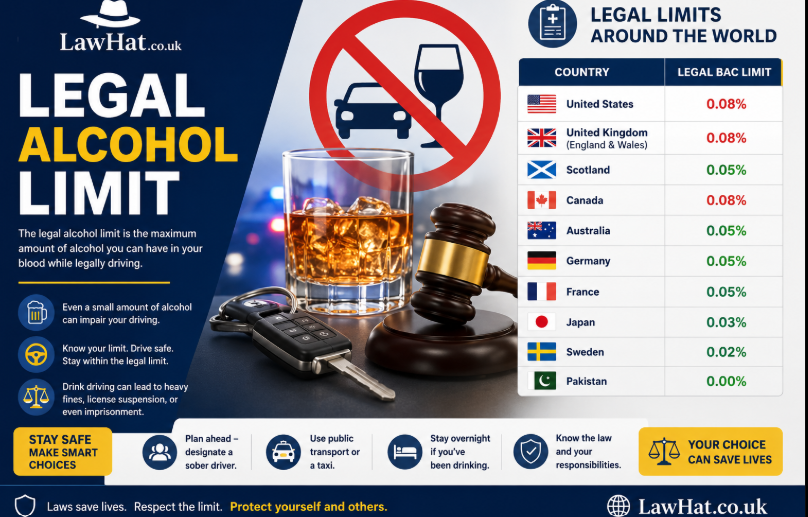
Different countries have different BAC limits. The table below shows some common legal limits.
| Country | Legal BAC Limit |
| United States | 0.08% |
| United Kingdom (England & Wales) | 0.08% |
| Scotland | 0.05% |
| Canada | 0.08% |
| Australia | 0.05% |
| Germany | 0.05% |
| France | 0.05% |
| Japan | 0.03% |
| Sweden | 0.02% |
| Pakistan | 0.00% |
Always check local regulations because laws may vary by region and driver category.
Factors That Affect BAC
Many people assume they can estimate their BAC based on the number of drinks consumed, but several factors influence alcohol absorption:
Body Weight
People with lower body weight generally reach higher BAC levels after consuming the same amount of alcohol as heavier individuals.
Gender
Women often reach higher BAC levels than men after consuming equivalent amounts of alcohol due to physiological differences.
Food Intake
Drinking on an empty stomach causes alcohol to enter the bloodstream more quickly.
Drinking Speed
Consuming several drinks in a short period increases BAC faster than drinking slowly.
Medication Use
Certain medications can amplify alcohol’s effects and increase impairment.
Zero-Tolerance Policies
Many countries enforce zero-tolerance laws for:
- Learner drivers
- Commercial vehicle operators
- Drivers under the legal drinking age
Under these laws, even a small amount of alcohol can lead to fines, license suspension, or criminal charges.
Penalties for Exceeding the Legal Limit
The consequences of driving above the legal alcohol limit can be severe. Penalties may include:
Fines
Drivers often face substantial financial penalties.
License Suspension
Authorities may temporarily or permanently suspend driving privileges.
Vehicle Impoundment
In some jurisdictions, vehicles can be seized after a DUI offense.
Criminal Record
Serious offenses can result in criminal convictions that affect employment and travel opportunities.
Imprisonment
Repeat offenders or those involved in accidents may face jail time.
Myths About Sobering Up
Many myths suggest ways to quickly reduce BAC, but most are ineffective.
Myth: Coffee Makes You Sober
Coffee may make you feel more awake, but it does not reduce alcohol levels in the bloodstream.
Myth: Cold Showers Remove Alcohol
Cold showers can increase alertness temporarily but do not lower BAC.
Myth: Eating After Drinking Eliminates Alcohol
Food can slow alcohol absorption but cannot remove alcohol already in the bloodstream.
The only reliable way to lower BAC is to allow time for the body to metabolize the alcohol.
Tips to Stay Safe
To avoid legal trouble and protect yourself and others:
- Designate a sober driver.
- Use public transportation.
- Call a taxi or rideshare service.
- Avoid drinking if you plan to drive.
- Stay overnight if necessary.
- Understand local alcohol laws before traveling.
Why Legal Alcohol Limits Matter
Legal alcohol limits are designed to reduce impaired driving and save lives. Research consistently shows that alcohol-related crashes decrease when strict laws are enforced. These limits encourage responsible behavior and help create safer roads for everyone.
Conclusion
Understanding the legal alcohol limit is an important part of responsible driving. Even small amounts of alcohol can affect your ability to operate a vehicle safely. Since legal limits vary between countries and driver categories, it is essential to know the rules where you live or travel. The safest choice is always to avoid driving after drinking and arrange alternative transportation whenever alcohol is involved.
Frequently Asked Questions (FAQ)
What is BAC?
BAC stands for Blood Alcohol Concentration, which measures the amount of alcohol in your bloodstream.
What is the most common legal alcohol limit?
Many countries use a legal BAC limit of 0.05% or 0.08% for regular drivers.
Can I drive after one drink?
It depends on factors such as body weight, gender, and local laws. Even one drink can impair driving ability.
How long does alcohol stay in the body?
The body typically metabolizes alcohol slowly, and the time varies based on individual factors and the amount consumed.
What happens if I exceed the legal alcohol limit?
You may face fines, license suspension, criminal charges, higher insurance costs, or imprisonment depending on local laws.
Is there a safe BAC level for driving?
The safest BAC level for driving is 0.00%, as any amount of alcohol can affect judgment and reaction time.