
Learn examples of testimonial evidence, how it works in court, its legal value, advantages, limitations, and common witness testimony types.
Testimonial evidence is one of the most common forms of evidence used in legal proceedings. It involves statements made by witnesses under oath about what they saw, heard, experienced, or know regarding a case. Whether in criminal trials, civil lawsuits, or administrative hearings, testimonial evidence often plays a critical role in helping judges and juries determine the facts.
This article explains what testimonial evidence is, provides real-world examples, discusses its strengths and weaknesses, and highlights its importance in the justice system.
Content Hints
What Is Testimonial Evidence?
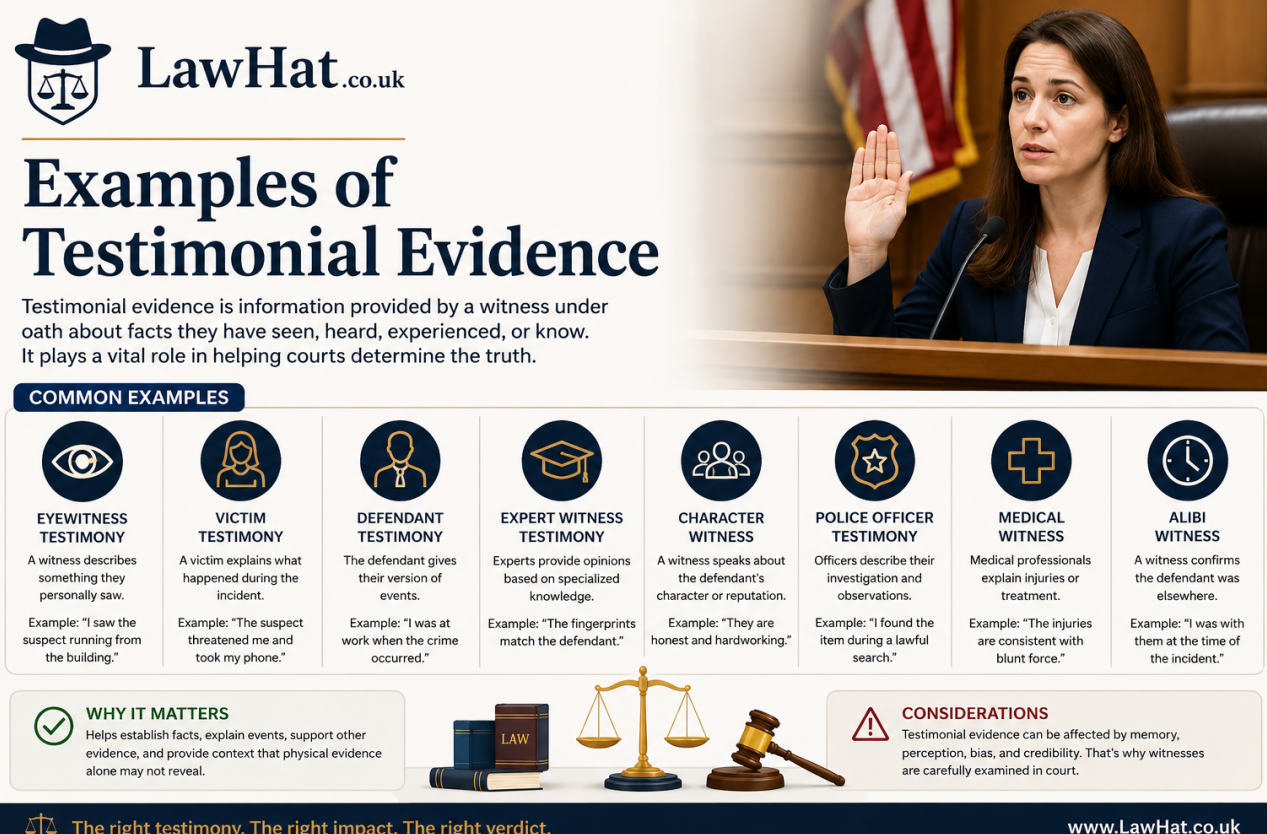
Testimonial evidence refers to oral or written statements given by witnesses under oath to provide information relevant to a legal case.
Witnesses may testify about:
- What they personally witnessed
- Conversations they heard
- Events they experienced
- Professional opinions (expert witnesses)
- Facts they personally know
Courts rely on testimonial evidence to establish timelines, identify suspects, explain events, and support or challenge other evidence.
Common Example of Testimonial Evidence
Here are several common examples of testimonial evidence used in court.
An eyewitness testifies about something they personally saw.
Example:
A pedestrian witnesses a car accident and tells the court:
“I saw the red car run the stop sign before hitting the blue truck.”
This is one of the most frequently used forms of testimonial evidence.
Victim Testimony
Victims often testify about crimes committed against them.
Example:
A robbery victim states:
“The suspect threatened me with a knife and demanded my wallet.”
Their testimony helps establish.
Defendant Testimony
A defendant may choose to testify in their own defense.
Example:
A defendant accused of theft says:
This testimony may support an alibi or explain their actions.
Expert Witness Testimony
Experts provide opinions based on specialized education, training, or experience.
Examples include:
- Doctors
- Engineers
- Psychologists
- Accountants
- Forensic scientists
Example:
A forensic expert testifies:
“The fingerprints found on the weapon match the defendant.”
Expert testimony helps explain technical evidence to the court.
Character Witness Testimony
Character witnesses speak about a person’s reputation or behavior.
Example:
A long-time employer states:
“The defendant has always been honest and trustworthy.”
This testimony may influence sentencing or credibility assessments.
Police Officer Testimony
Law enforcement officers frequently testify about investigations.
Example:
An officer states:
I found illegal substances inside the suspect’s vehicle.
Police testimony often explains how evidence was collected.
Medical Witness Testimony
Doctors or nurses may testify about injuries or medical treatment.
Example:
A physician explains:
“The victim’s injuries are consistent with blunt force trauma.”
Medical testimony can establish the severity and cause of injuries.
Alibi Witness Testimony
An alibi witness confirms a person’s location at a particular time.
Example:
A coworker testifies:
Such testimony may help establish innocence.
Types of Testimonial Evidence
| Type of Testimony | Example | Purpose |
| Eyewitness | Saw a crime occur | Describe observed events |
| Victim | Describes the offense | Explain what happened |
| Defendant | Gives personal account | Present a defense |
| Expert | Provides specialized opinion | Explain technical matters |
| Character Witness | Speaks about reputation | Show character or credibility |
| Police Officer | Describes investigation | Explain evidence collection |
| Medical Witness | Explains injuries | Establish medical facts |
| Alibi Witness | Confirms location | Support innocence |
Why Testimonial Evidence Is Important
Testimonial evidence helps courts:
- Understand the sequence of events
- Identify suspects
- Verify timelines
- Explain physical evidence
- Clarify technical issues
- Evaluate witness credibility
In many cases, testimony fills gaps that physical evidence alone cannot explain.
How Courts Evaluate Testimonial Evidence
Judges and juries do not automatically believe every witness.
Credibility
Is the witness honest?
Consistency
Has the witness maintained the same story over time?
Opportunity to Observe
Did the witness have a clear view or firsthand knowledge?
Memory
Can the witness accurately recall the events?
Bias
Does the witness have a personal interest in the outcome?
These factors determine how much weight the testimony deserves.
Testimonial Evidence vs Physical Evidence
Although both are valuable, testimonial and physical evidence differ significantly.
| Testimonial Evidence | Physical Evidence |
| Comes from people | Comes from objects |
| Based on memory | Based on tangible items |
| Can be affected by perception | Usually more objective |
| Subject to cross-examination | Can be scientifically analyzed |
| Includes witness statements | Includes DNA, fingerprints, weapons, documents |
Strong cases often combine both forms of evidence.
Advantages of Testimonial Evidence
Testimonial evidence offers several benefits.
Provides Firsthand Information
Witnesses can describe events directly from personal experience.
Explains Context
Testimony helps explain why events occurred and how they unfolded.
Supports Other Evidence
Witness statements may strengthen physical or documentary evidence.
Helps Establish Intent
A witness may testify about statements or behavior showing someone’s intent or state of mind.
Limitations of Testimonial Evidence
Despite its value, testimonial evidence has limitations.
Memory Errors
People may unintentionally forget or misremember details.
Bias
Personal relationships or interests may influence testimony.
Stress
Witnesses may experience anxiety that affects recall.
Perception Differences
Two people may observe the same event differently.
False Testimony
In rare cases, witnesses may intentionally provide inaccurate statements, which can result in perjury charges.
How Lawyers Challenge Testimony
Attorneys use cross-examination to test the reliability of witnesses.
They may question:
- Inconsistencies
- Memory accuracy
- Visibility
- Bias
- Prior statements
- Motives
Real-Life Example
Imagine a burglary case.
Evidence includes:
- A neighbor testifies they saw someone climbing through a window.
- A police officer explains how evidence was collected.
- A forensic expert confirms fingerprints found at the scene.
- The homeowner describes missing property.
- The defendant presents an alibi witness.
Together, these different forms of testimonial evidence help the court reconstruct what happened and evaluate the credibility of each account.
Conclusion
Testimonial evidence is a cornerstone of the legal system. It allows witnesses, victims, experts, and defendants to provide firsthand accounts or professional opinions that help courts understand the facts of a case. Common examples include eyewitness testimony, expert opinions, victim statements, police testimony, and alibi witnesses.
While testimonial evidence can be highly persuasive, it is carefully evaluated for credibility, consistency, and reliability. When combined with physical evidence and documentation, it plays a vital role in ensuring fair and informed judicial decisions.
Frequently Asked Questions (FAQ)
Testimonial evidence is information provided by a witness under oath about facts they personally observed, experienced, or know.
What is the most common example?
Eyewitness testimony is one of the most common examples, where someone describes what they personally saw or heard.
Is expert witness testimony considered?
Yes. Expert witnesses provide specialized opinions based on their knowledge, training, or experience, making their statements a form of testimonial evidence.
Can testimonial evidence be enough to win a case?
In some cases, credible and reliable testimony may be sufficient, but courts often prefer.
What makes reliable?
Reliability depends on factors such as the witness’s credibility, consistency, memory, and absence of bias.